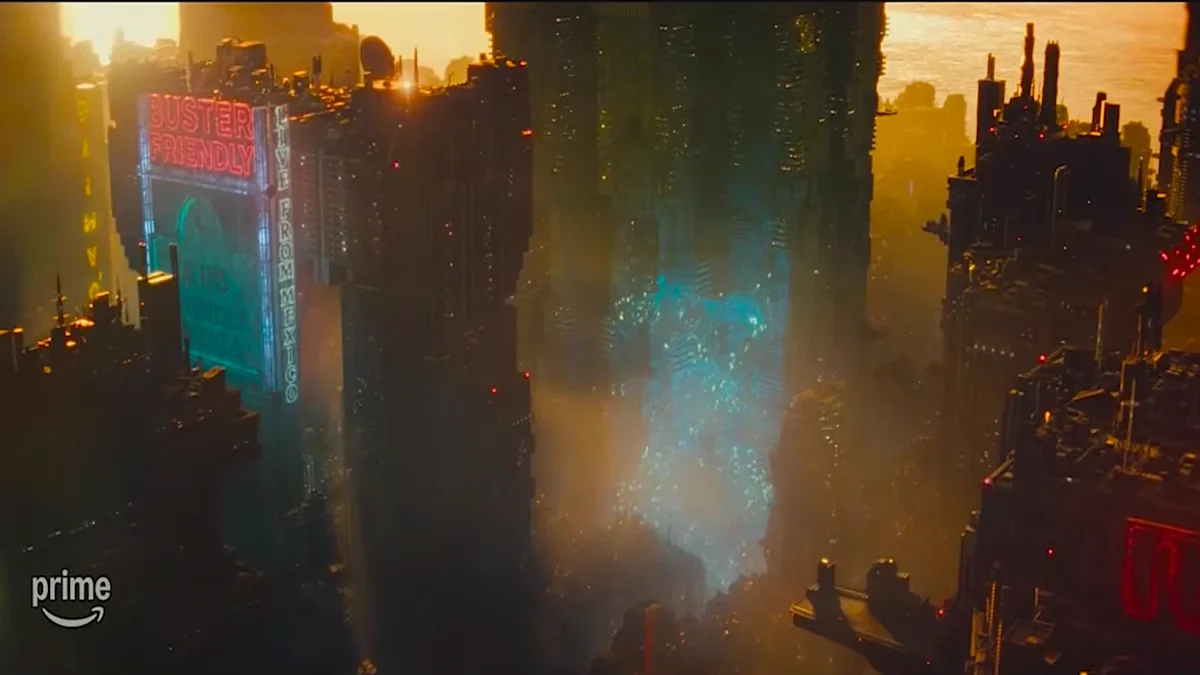
Los Angeles. 2099.
Having now seen the entirety of Blade Runner 2099, I can say with a great deal of enthusiasm that what showrunner Silka Luisa and her team have accomplished is magnificent.
It took me a few viewings of the first and second episodes to acclimate to what is a decidedly different tone from Ridley Scott's original film and Denis Villeneuve's miracle of a sequel, Blade Runner 2049. Having spent so many years immersed in these films, there were certain expectations I brought with me that I eventually realized I needed to let go of.
Despite being marketed as a sequel series to the films, Blade Runner 2099 has absolutely nothing to do with the ongoing narrative of Deckard and Rachael that connected the first two films. What it does share with those films are architectural, technological and philosophical foundations. From the legacy of Eldon Tyrell to the technology embodied by JOI, there is quite a bit of what was established in the first two films reflected back at us, without the series feeling the need to retread what's gone before. I found this incredibly refreshing.
While the films are largely quiet, cerebral affairs, 2099 is loud and busy. There is an energy to this series that initially took me by surprise. Once I began to understand what Silka Luisa was doing with the material, and the kind of story she wanted to tell within this world, I was all in.
One of the great accomplishments of Blade Runner 2099 is the sheer amount of world-building happening throughout the series. The practicality of the sets, the richness of the environments and the presence of some very layered and complicated characters make returning to this world an immensely satisfying experience.
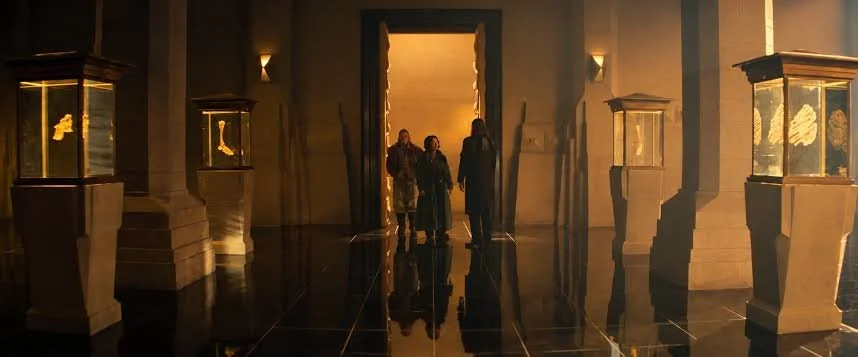
The recreated Tyrell offices for Blade Runner 2099.
Production designer Paul Inglis and his team have created a remarkable visual tapestry. There were moments throughout the series where I genuinely felt as though I'd stepped back into Ridley Scott's vision of the future, while also recognizing what Denis Villeneuve brought to the world with his seemingly impossible masterpiece of a sequel. There is a wonderful sense of continuity in the production design that allows us to believe in the decades that have passed within this world.
Having been monumentally disappointed with Blade Runner: Black Lotus, I've been nervous for some time about the prospect of a live-action Blade Runner television series. So much of what makes Blade Runner special is difficult to articulate, let alone replicate. Its atmosphere, its philosophical underpinnings and its preoccupation with the human condition have given the films a life well beyond their respective releases.
I think one of the reasons Blade Runner 2099 succeeds where, for me, Alien: Earth ultimately didn't, is that Silka Luisa understood the heart of Blade Runner. While Alien: Earth shifted much of its narrative and philosophical focus toward transhumanism, cyborgs and the transference of human consciousness, Luisa recognized how much there was still to explore within the mythology that had already been established. She took that mythology and made it richer, deepening our understanding of this world and the complexities of existence within it. There is something deeply satisfying about watching a filmmaker discover new possibilities within the very ideas that made a property so compelling in the first place.
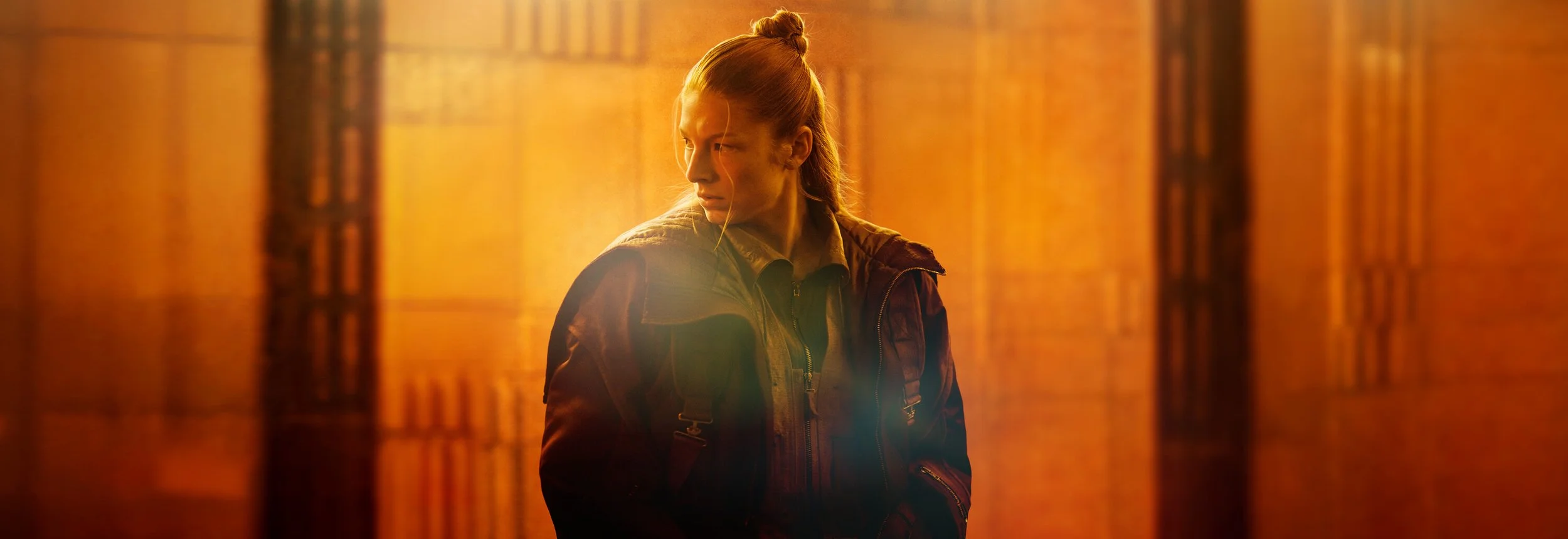
Cora, played by Hunter Schafer.
What excites me most about 2099 is that Luisa has managed to expand the world of Blade Runner considerably without compromising its philosophical identity. The series is evidence of just how much fertile storytelling ground remains within this universe, even when we leave its most iconic characters behind.
I have some quibbles with a few creative decisions, and there is one particular performance that repeatedly pulls me out of the experience. Those criticisms aside, what Luisa and her team have accomplished is, for me, a home run.
For the first time since walking out of a theater in 2017, I'm genuinely excited about where Blade Runner might go next.
Rating: 4.5 out of 5 stars
Jaime Prater for Shoulder of Orion: The Blade Runner Podcast